
Modern Work Experience: Preparing Young People for the Future of Work
The workplace is changing, and so should work experience. For decades, work experience has been a cornerstone of career education, giving students a taste of working life. However, the world of work today looks very different from the past. Businesses operate in fast-paced, digital environments, many roles are hybrid or remote, and the skills employers value most such as adaptability, problem-solving, and digital literacy are not always developed through traditional placements.
Modern Work Experience is our response to this shift. It is a flexible and innovative approach that reflects the realities of today’s economy and the needs of both employers and students. By moving beyond the old model of a single week in the workplace, we can create experiences that are shorter, more focused, and more impactful. This ensures young people gain relevant skills and insights while employers can engage without heavy time commitments.
This initiative is not just about changing the format. It is about future-proofing our workforce. Norfolk and Suffolk are home to growing sectors like clean energy, technology, and creative industries. These industries need talent that understands digital tools, collaboration, and innovation. Modern Work Experience helps bridge that gap by giving students exposure to the skills and environments that matter most.
Why Modern Work Experience Matters
The importance of this initiative cannot be overstated. Traditional work experience often struggles to keep pace with the evolving world of work. Many businesses no longer have the capacity to host students for a full week, and some roles especially in technology or remote-first companies do not lend themselves to in-person shadowing. At the same time, students need experiences that prepare them for jobs that may not even exist yet.
Modern Work Experience addresses these challenges head-on. It offers flexibility for employers, making it easier to participate, and relevance for students, ensuring they gain skills that employers truly value. This approach also opens doors for industries that previously found work experience difficult to deliver, such as digital firms or companies with dispersed teams.
By embracing this model, we are creating a win-win scenario. Employers can inspire and shape future talent without disrupting operations. Students can build confidence, develop transferable skills, and understand the realities of modern careers. Our region benefits from a stronger, more prepared workforce ready to meet the demands of a changing economy.
 Our Approach: The equalex Model
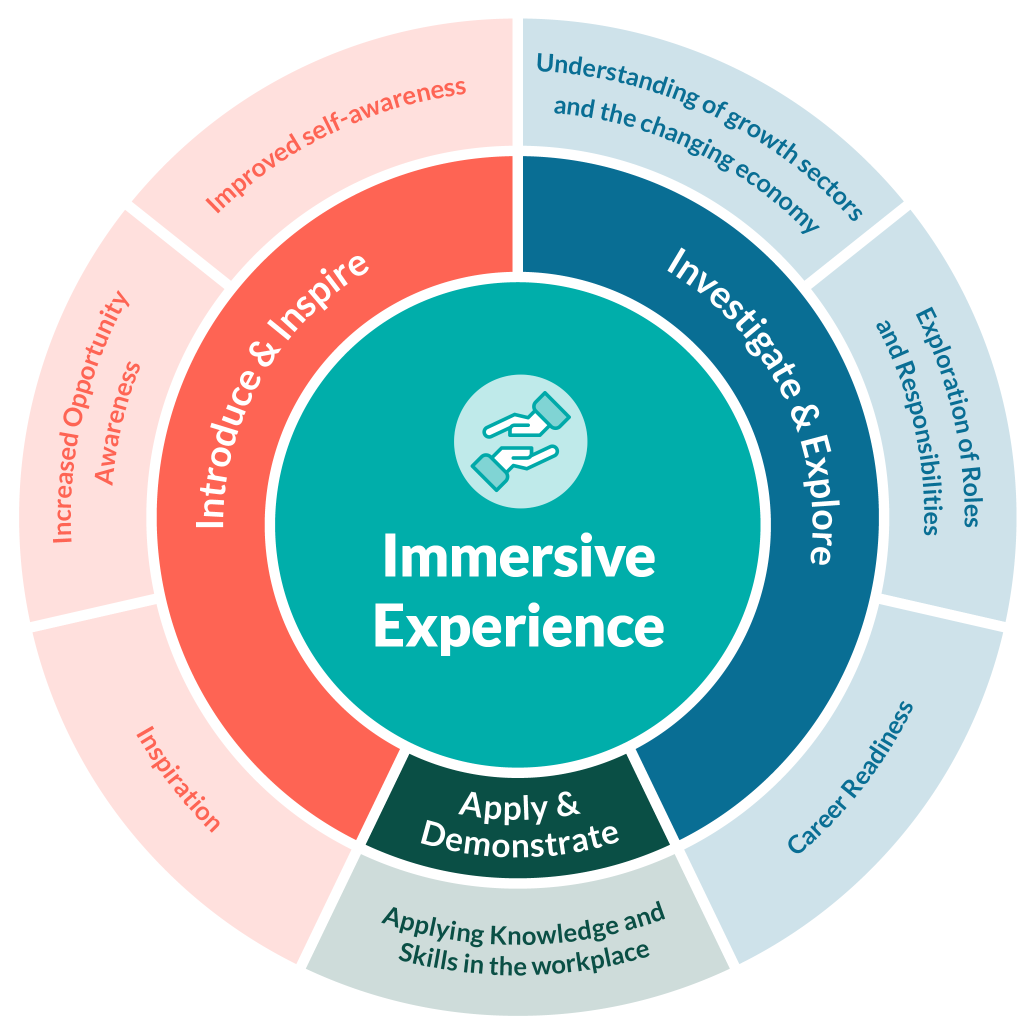
The equalex Model illustrates the journey of Modern Work Experience and the outcomes it delivers for young people. At its core is Immersive Experience, which provides students with meaningful opportunities to engage with real-world work environments and challenges. Surrounding this are three key stages that shape the experience:
Introduce and Inspire: This stage sparks curiosity and builds awareness of opportunities. It helps students develop self-awareness and understand the wide range of careers available, inspiring them to think about their future.
Investigate and Explore: Students deepen their understanding of growth sectors, roles, and responsibilities. This stage promotes career readiness by encouraging exploration and informed decision-making.
Apply and Demonstrate: Learners put their knowledge and skills into practice, applying what they have learned in real or simulated workplace settings. This reinforces confidence and prepares them for the transition into employment.
Together, these stages ensure that Modern Work Experience is not just a placement but a structured, impactful process that equips young people with the skills, insights, and confidence they need for the future of work.
What types of work experience can I offer?
How We Can Help
We’re here to support you in setting up and delivering meaningful work experience placements that benefit both your organisation, and the young people involved. Our team can offer practical guidance and tailored support to make the process smooth and impactful.
Here’s how we can help:
- Connect you with local schools and colleges - We’ll help you build relationships with education providers in your area, making it easier to coordinate placements and align with curriculum needs.
- Help you design tasks and projects for students - We can work with you to identify suitable activities that give students real insight into your industry while adding value to your business.
- Offer tips for successful placements - From planning the student’s schedule to managing expectations, we’ll share best practice advice to ensure the experience is positive for everyone involved.
- Support inclusive placements - We’ll guide you on how to offer placements that are accessible to students with additional learning needs or disabilities, helping you become a more inclusive employer.
- Provide templates and resources - We can supply ready-to-use materials such as placement agreements, timetables, feedback forms, and safeguarding checklists to save you time and ensure compliance.
- Help identify suitable students - Working with schools and colleges, we can help match your organisation with students whose interests and aspirations align with your sector.
Young people may approach you directly for tailored placements. These can be flexible — from a few days to a structured programme developed by your organisation.
Placements that run for one or two days per week over a longer period (a term or academic year), usually following a successful interview. These are matched to a student’s interests and career aspirations.
Ideal for reaching more students, especially those facing barriers to travel or in-person access. These can include recorded videos, presentations, online workbooks, or live sessions.
In industries where hands-on experience isn’t possible, students can observe a staff member to learn about their role and responsibilities.
If you're open to hosting groups, you can offer taster days or guided tours to introduce young people to your workplace and sector.
Many schools offer students the chance to take part in work experience for one or two weeks during the school term — typically in the summer of Year 10, though this can vary. Explore the new Modern Work experience format: Modern Work Experience | The Careers and Enterprise Company
When taking on a young person for work experience it’s important to ensure correct procedures are in place to protect the young person and your business. When taking on a young person for work experience you may be asked for the following:
- A health and safety risk assessment.
- Employers’ Liability Compulsory Insurance covering students on work experience.
- Conduct Disclosure and Barring Service (DBS) checks on any relevant staff if necessary.
Why you should work with the education sector